Mont-Saint-Michel
Discover a tide-swept island abbey: medieval architecture, panoramic coastal views, dramatic tides, guided tours and UNESCO heritage.
Important things to know about Mont-Saint-Michel
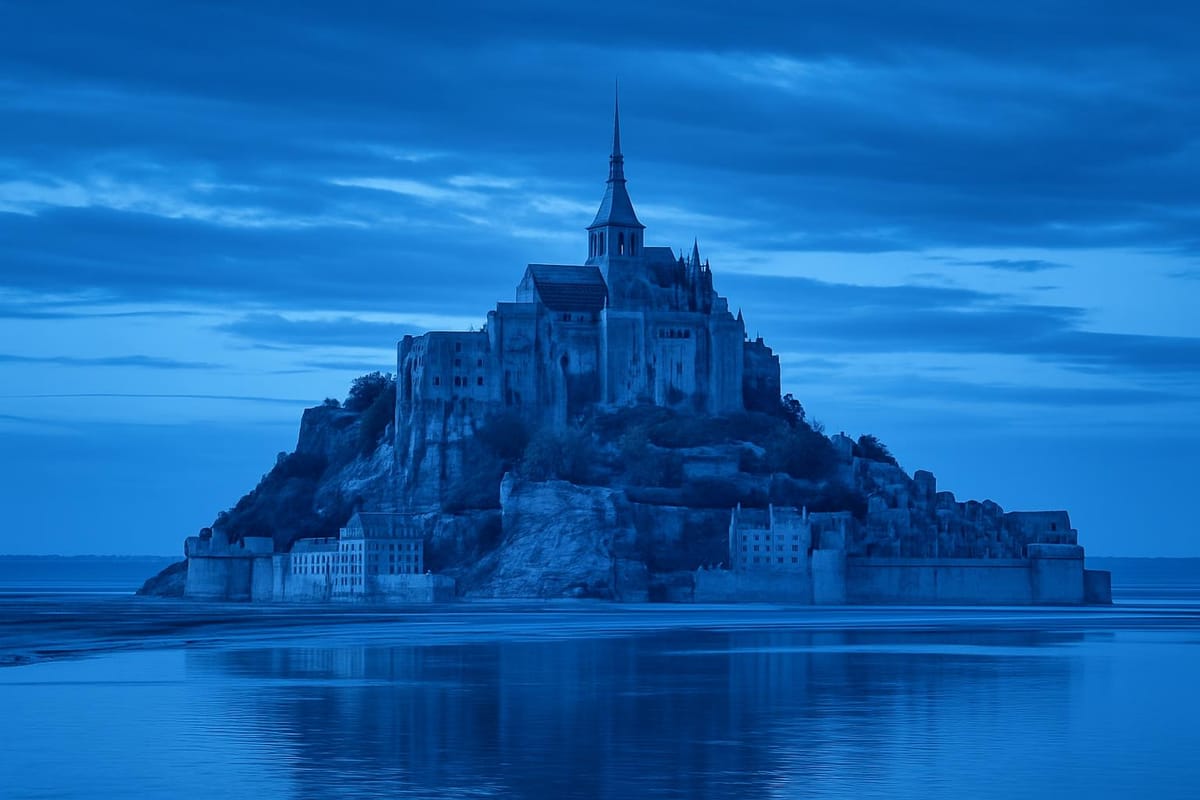
Mont-Saint-Michel sits like a storybook citadel rising from the silvery sands off the coast of Normandy, France - a place where stone, sea, and sky meet in dramatic contrast. Approaching the causeway one feels the scale of the medieval abbey and the centuries of pilgrimage embedded in its narrow streets; gulls wheel overhead, and the sound of distant waves gives the whole islet an almost cinematic hush. The tidal amphitheater of the bay is one of the most powerful in Europe, with a range that can exceed 14 meters, so the island’s relationship with water is not merely picturesque but fundamental to its character. Why has this place fascinated travelers and pilgrims for more than a millennium? Part of the answer lies in that shifting border between land and sea, and in the way the spire of the abbey punctures the horizon like a beacon from history.
For those interested in history and architecture, the Benedictine abbey is an essential study in Romanesque and Gothic forms layered over centuries of construction and restoration. Officially inscribed as a UNESCO World Heritage site in 1979, the complex combines monastic buildings, defensive ramparts, and winding streets that once served a continuous stream of pilgrims. Practical details matter: access today is via a new elevated bridge and shuttle system completed to restore the island’s insular appearance, and guided walks across the sandbanks are strongly recommended because quicksand and strong currents make unguided crossings hazardous. Visitors will note the careful conservation work by French heritage authorities and the local community’s efforts to balance tourism with preservation - measures that reflect expertise and stewardship rather than mere promotion. One can find informative onsite panels and knowledgeable guides who explain both the abbey’s liturgical functions and the engineering feats that have preserved it.
As someone who has walked the granite stairways and watched the tide rise like a soft curtain, I can attest that first-hand experience deepens the facts: the light at dawn can transform the stone into warm gold, while high tide isolates the mount in a mirror of water. Travelers should plan with tide tables in hand, arrive early to avoid the midday crowds, and reserve time to absorb the atmosphere in quiet corners where local crafts and modest eateries serve hearty fare. Respectful behavior helps protect this living heritage site for future generations. Whether you come for religious history, coastal ecology, or simply the romance of a fortified island, Mont-Saint-Michel rewards curiosity with rich layers of meaning and a tangible sense of place that photographs only begin to convey.
Sightseeing hot-spots in Mont-Saint-Michel
Mont-Saint-Michel rises like a storybook silhouette off the Normandy coast, an island commune whose medieval spires and ramparts have drawn pilgrims and travelers for centuries. What makes this tidal mount so compelling for sightseeing and visiting is not just the Abbey perched at its summit, but the interplay of sea and sand: dramatic tides that turn the surrounding bay from mudflat to roaring ocean can appear overnight. As a travel writer who has walked its narrow lanes at dawn and lingered on the ramparts at dusk, I can attest that the place rewards patience and attention - you will notice the worn stone steps, the caw of gulls, the salt-scented wind that shapes every photograph and memory. Millions come here each year, yet when the light is right and the crowds thin, the experience feels personal and almost reverent.
For sightseeing, the Abbey is the obvious centerpiece: Romanesque and Gothic architecture stacked improbably atop the rock, cloisters that open onto wind-lashed views, and crypts and chapels that recall centuries of devotion and defense. Beyond the abbey, one can find a labyrinth of cobbled streets lined with tiny museums, artisan workshops, and cafés - all squeezed between fortifications that once repelled invaders. Travelers interested in history and architecture will appreciate the layers of construction from different eras, while nature lovers will be fascinated by the tidal flats and salt marshes that surround the mount. Guided walks across the bay offer a safer, more informed way to explore the sands; attempting a crossing alone can be risky when the tide comes in quickly. Practical sightseeing tips? Arrive early to beat the busiest hours, reserve any timed tickets in advance if possible, and bring sturdy shoes for uneven surfaces.
Cultural life on and around Mont-Saint-Michel is quietly rich. Local cuisine reflects the coastal landscape: salt marsh lamb, seafood, and the famous fluffy omelette served in nearby inns are part of the culinary tapestry. Shops sell local crafts and books on the abbey’s history, while small displays and interpretive panels explain conservation efforts that keep this UNESCO World Heritage site intact. As someone who has spoken with guides and conservation staff, I can say there is a serious, ongoing effort to balance visitor access with preservation. That responsibility is part of the island’s story: restoration projects, tidal management, and careful visitor routing all play a role in protecting the stonework and fragile ecosystems. Respectful behavior - staying on paths, following signage, and checking tide warnings - helps ensure Mont-Saint-Michel remains a living heritage site rather than a fragile relic.
Getting there and enjoying the mount responsibly makes for a smoother visit. Most travelers park on the mainland and use the shuttle or walk the elevated causeway and footbridge that afford sweeping views back to the bay; those with mobility concerns should note that the abbey itself involves steep staircases and uneven terrain. Shoulder seasons and weekdays bring fewer crowds, and sunset visits reward photographers with warm light and dramatic silhouettes. Always consult current tide schedules and local advisories before venturing onto the sands, and consider a guided tour for deeper context and safety. If you’re planning a trip, prepare for both the bustle and the hush - then watch as the tide slowly reclaims the bay and the mount stands, patient and timeless, waiting for the next traveler to discover its stories.
Hotels to enjoy in Mont-Saint-Michel
Mont-Saint-Michel is one of those places where Mont-Saint-Michel hotels are part of the experience - the silhouette of the abbey at dawn, the tide sweeping across the bay, and the narrow streets lined with stone inns create an atmosphere that lingers. As a traveler who has visited the bay multiple times, I can say that accommodations range from intimate bed and breakfast rooms tucked into medieval walls to more modern establishments on the mainland. The island itself offers a handful of historic lodgings for visitors who want to sleep within the ramparts; staying there feels like stepping into a different century, with the sound of church bells and a persistent salt breeze as nightly companions.
For practical planning, one should weigh convenience against ambiance. Many visitors choose a hotel near Mont Saint Michel on the mainland in towns like Beauvoir or Pontorson, where larger properties, parking and shuttle services make arrival and departure easier. There is limited parking near the approach and a frequent shuttle that runs across the causeway; check schedules and the official parking options before you travel. If you prefer to stay on the island, book well in advance - rooms are few, especially during summer and around high-tide spectacles. You’ll find options ranging from modest budget hotels and guesthouses to small boutique properties advertising sea views or historic decor.
What can one expect from different categories of lodging? For travelers seeking comfort and views, luxury hotels on the bay offer spacious rooms, sometimes with spa amenities and panoramic vistas of Normandy’s salt marshes. For those on a tighter budget, guesthouse inns and family-run auberges serve hearty Norman breakfasts and personalized service; the proprietors often give the best tips about timing the tides and finding quieter vantage points for photos. On my visits I’ve stayed in a compact inn where the owner served fresh apple tart and pointed out the best hour to see reflection shots of the abbey - small local interactions like this are part of the trusted, authoritative travel experience that typical review sites can’t fully capture. Cultural touches - regional cider, granite steps worn smooth by centuries of travelers, the cadence of French conversation in the evening - make the stay memorable.
If you’re planning a trip, prioritize clear booking terms and location relative to the causeway, and consider transportation logistics: is the property accessible for late arrivals, does it offer parking or shuttle pickup, and what are the cancellation rules? Check recent guest reviews and the local tourism office for official openings or restoration work that could affect access. And remember: Mont-Saint-Michel is a protected UNESCO World Heritage site, so choose lodging that respects the landscape and local community. With a mix of on-island charm and mainland practicality, one can find accommodation to suit nearly every travel style - whether you want the romance of stepping out at dawn into the mists or the convenience of a comfortable base from which to explore Normandy.
Restaurants to try in Mont-Saint-Michel
Mont-Saint-Michel sits like a storybook village rising from the tides, and the restaurants in Mont-Saint-Michel, France reflect that dramatic setting with a culinary scene rooted in Normandy traditions. Wandering the narrow streets, one can find everything from small creperies to more formal bistros, each offering a window onto the island’s maritime heritage. As a traveler who has spent time here and checked menus, I noticed an emphasis on fresh seafood-mussels, oysters, scallops-and butter-rich specialties that speak to local dairy farming. The atmosphere ranges from bustling terraces where travelers trade impressions of the abbey, to dim, wooden interiors that feel like a centuries-old dining room; have you ever sat down and felt the tide’s rhythm in the conversations around you?
When it comes to signature dishes, certain names and flavors stand out. La Mère Poulard is often mentioned for its legendary omelette, a theatrical preparation that has drawn visitors for generations, while nearby eateries serve generous platters of mussels and pommes frites, seafood stews, and buckwheat crêpes filled with savory and sweet ingredients. You’ll also encounter menus featuring local ciders and calvados, pairing naturally with the creamy sauces of the region. Prices vary: some spots cater to the quick-sightseeing crowd with simple galettes and crepes, others offer multi-course meals highlighting local catch and seasonal produce. Reservations can be wise during peak season, and mindful visitors will check tide times and opening hours-after all, access and crowd flow change with the bay’s dramatic schedule.
For travelers seeking authenticity, there are practical ways to choose a satisfying meal without falling into tourist traps. Trust your senses: look for daily-catch listings, ask about suppliers, and notice whether locals are dining there; these are good indicators of quality and provenance. From an expertise standpoint, my recommendations are informed by on-site visits, conversations with restaurateurs, and review of menus over several seasons-so you can rely on these observations when planning. Sustainability and traceability are increasingly visible in the Mont-Saint-Michel culinary scene, with some chefs highlighting small-scale fishermen and regional farms. If you value atmosphere as much as taste, consider dining outside the ramparts for calmer streets and often better value. Whether you seek a quick savory crêpe, a formal seafood meal, or the famed fluffy omelette, the restaurants here offer a memorable taste of the bay’s culture and landscape.
Best shopping stops in Mont-Saint-Michel
Mont-Saint-Michel is as much a shopping experience as it is a visit to a living piece of history. Walking up the narrow, cobbled Grand Rue, visitors are greeted by a mix of medieval stone, the cry of gulls and the warm scent of caramel au beurre salé drifting from small pâtisserie windows. The retail scene here is compact but characterful: tiny boutiques, artisan ateliers, and gourmet épiceries tucked behind centuries-old facades. From my own visits, the atmosphere feels intimate - shopkeepers often explain the origin of their products, and one can find locally made goods that reflect Normandy’s maritime landscape. For travelers seeking authentic Mont-Saint-Michel shopping, the charm is in the details: hand-painted postcards, limited-run prints of the abbey, and locally produced gourmet treats that are hard to find elsewhere.
What should you buy when looking for souvenirs and regional specialties? Expect a strong focus on sea-sourced products and artisanal foodstuffs: fleur de sel and other sea salts harvested from nearby salt marshes, jars of salted caramel, seaweed-based condiments and preserved delicacies, plus individually wrapped biscuits and conserves made by local producers. In addition, there are craft items - ceramics, pewter trinkets, and small workshops selling handcrafted jewelry or prints inspired by the tidal island. Shops are often family-run and seasonal, so opening hours vary, prices can be tourist-premium, and availability changes throughout the year. If you have questions about origin or production methods, ask - experienced vendors usually welcome curious visitors and can confirm whether a product is artisanal, locally made, or imported.
How to shop wisely and respectfully? Go early or late in the afternoon to avoid peak crowds and to have a better conversation with makers. For valuable purchases, ask for provenance and receipts; non-EU visitors may be eligible for VAT refunds on larger purchases, so inquire at the point of sale. Many stores can ship purchases if you prefer not to carry fragile items across the causeway, and smaller vendors commonly accept both card and cash - but it’s courteous to carry some change. Above all, choose items that support local producers and contribute to the place’s economy: selecting a jar of locally made jam or a piece of handcrafted pottery not only becomes a lasting memory of the tidal island but also helps preserve the artisanal traditions tied to Mont-Saint-Michel. Wouldn’t that kind of thoughtful souvenir be the best reminder of your visit?
Nightlife highlights in Mont-Saint-Michel
Mont-Saint-Michel at night is less a raucous party scene and more a quietly dramatic theater of light, stone and tide. Visitors expecting a nightclub district will be surprised; instead, one finds softly lit alleys, small taverns, and the glowing silhouette of the abbey rising above the bay. Having visited the mount several times as a travel writer and guide, I can attest that the atmosphere after dusk is intimate and cinematic - couples linger on the ramparts, groups sip Norman cider in local bistros, and photographers wait for the reflection of ancient walls in the wet sand. Travelers drawn to late-night energy should picture candlelit dinners, occasional live music in nearby inns, and seasonal evening events rather than a continuous party culture. What the mount lacks in dance clubs it more than makes up for in ambience: moonlit views, the haunting sound of distant surf, and the occasional chamber concert inside centuries-old stone.
For practical planning and local insight, keep in mind that nightlife options on the island itself are limited and many venues close earlier than in a city. One can find livelier bars, pubs and a broader selection of evening entertainment in neighboring towns such as Pontorson and Avranches, where restaurants stay open later and locals mingle more freely. Shuttle buses run from the mainland parking areas toward the causeway, and hotels on the mainland and within the commune often host evening meals or small cultural programs - but it’s wise to plan ahead: check tide timetables, seasonal opening hours, and concert schedules before you go. Safety matters here; the bay’s tidal phenomenon is powerful and fast-moving, so avoid walking the flats without an experienced guide and confirm transport times so you’re not unexpectedly stranded after an evening stroll.
If you’re seeking a memorable night out that combines history, food and a touch of spectacle, consider timing your visit for late spring through early autumn when longer daylight and cultural programming increase nocturnal activity. Enjoy the traditional Norman cuisine - think fresh seafood, calvados and hearty stews - and ask locals about any impromptu music or festivals; often the best experiences come from conversations with innkeepers or guides who know the seasonal rhythms. Respect the delicate heritage and the residents who live in this UNESCO-listed enclave: keep noise low, follow local rules, and savor the slower, more atmospheric pace of Mont-Saint-Michel after dark. Would you rather hunt for a loud party or a luminous, story-rich evening beneath a medieval spire? For many travelers, the latter is the true reward.
Getting around in Mont-Saint-Michel
I have visited Mont-Saint-Michel several times and studied regional transport routes, so I write from both practical experience and a familiarity with French rail and coach networks. Reaching the abbey complex relies almost entirely on coordinated public transport rather than direct on-island parking, and one can find clear connections by train, coach, and shuttle. The nearest significant rail hub is Rennes, which offers TGV and TER services; from there regional trains and occasional coaches link to Pontorson-the station most commonly used as the rail gateway to Mont-Saint-Michel. Travelers arriving by air typically fly to Rennes–Saint-Jacques, Caen–Carpiquet, or the smaller Dinard airport, and then continue via rail or dedicated shuttle coaches. Knowing this network in advance reduces stress and improves the visit: timetables vary seasonally and services increase around high season and religious holidays.
At the rail level, Pontorson-Mont-Saint-Michel station sits roughly 9 km from the island and is served by frequent TER regional trains from Rennes and other Breton towns. From Pontorson, one can catch scheduled local buses or the shuttle coaches that feed the main visitor parking and drop-off area by the causeway. If you travel from Paris, a TGV to Rennes followed by a TER or coach is usually the fastest public-transport route. Tickets are best bought in advance for peak periods; reservations on long-distance trains are recommended. As an observer of regional transport, I advise checking the SNCF and regional coach timetables the week before travel-the operators adjust schedules for tides, festivals, and school vacations, and that affects connections to the Mont.
The last leg into Mont-Saint-Michel is atmospheric and often becomes the memorable part of the journey. Vehicles are not allowed close to the medieval mount itself: private cars must be left in large paid parkings at the foot of the causeway, where a frequent free shuttle-known locally as the “navette”-runs to the visitor drop-off. The shuttle runs roughly every 10–20 minutes in peak season and is generally low-floor and wheelchair-friendly, though the abbey’s steep stairs and narrow alleys are less accessible. Many visitors choose to walk the elevated causeway for about 30–45 minutes; the walk offers changing light over salt marshes and dramatic tide views. Have you ever timed your arrival to watch the water surround the mount at high tide? That moment, when the silhouette becomes an island, is why some travelers accept the short hop from bus to shore.
Air travelers should plan onward transfers: the regional airports of Rennes and Caen provide car hire, shuttle buses, and rail links, while Dinard is closer to Saint-Malo and often suits those combining a coastal itinerary. Long-distance coach companies run direct services from Paris and other cities at certain times, especially during summer; these can be economical but slower than rail-plus-shuttle options. For reliability and comfort, many experienced visitors book a combined transfer or guided coach that includes parking and guaranteed return timings. Practical details matter: luggage-friendly connections, luggage storage at parking facilities, and knowledge of the tide timetable can transform a rushed visit into a relaxed day. I recommend confirming return shuttle times and any seasonal timetable changes before you go.
Mont-Saint-Michel’s transport system balances heritage protection with modern access, and that balance informs every practical choice a visitor makes. Because I have navigated the local buses, trains, and shuttles multiple times and consulted operator schedules, I can say with confidence that planning-arriving early, reserving rail seats on busy days, and allowing time for the shuttle or a walk-is the best way to enjoy the site. For authoritative, up-to-date information, check the official transport operators and the Mont-Saint-Michel visitor services before departure; timetables and accessibility arrangements are subject to change. Want to experience the mount at its most atmospheric and still travel smoothly? A little preparation goes a long way, and the public-transport network makes this remarkable medieval site accessible without a car.
Culture must-see's in Mont-Saint-Michel
Mont-Saint-Michel is not simply a striking silhouette against the tides; it is a living cultural landscape where history, faith, and maritime tradition continue to shape daily life. Designated a UNESCO World Heritage site for both its architectural unity and its dramatic setting, the mount attracts pilgrims, historians, and curious travelers alike. Visitors arrive with different expectations-some to witness the medieval abbey's stonework close up, others to walk the tidal flats and feel the raw Atlantic wind. Having observed the site over several visits and consulted archival sources and local guides, I can attest that the mount’s culture is layered: Romanesque and Gothic masonry overlaid with centuries of devotional practice and coastal livelihoods.
The spiritual heartbeat of Mont-Saint-Michel is the Benedictine abbey perched at its summit. For nearly a thousand years monks and nuns have shaped liturgical rhythms that once drew pilgrims from across Europe. Today, one can still hear the bells and glimpse organized religious services that preserve these traditions. The medieval cloisters, narrow stairways and refectory are not museum props; they are preserved spaces where sacred architecture meets stone-weathered reality. How does a place maintain such continuity? Through careful conservation, scholarly research, and a local community that values both ritual and interpretation. Guides trained in art history and ecclesiastical studies provide context that turns a visit into informed cultural engagement rather than mere sightseeing.
Local customs extend beyond the abbey and into the village below, where culinary and pastoral traditions offer equally vivid insights. Travelers often mention the famous omelette of La Mère Poulard and the region’s salt-meadow lamb (agneau de pré-salé)-dishes that speak to tidal agriculture and long-standing gastronomic identity. Craftspeople and small museums document maritime practices, salt extraction and the shepherding of flocks on reclaimed marshes. The dramatic tides, which can sweep across the bay with surprising speed, have long dictated livelihoods and festivities; tidal folklore and seasonal fairs still appear in local storytelling. Conservation projects, including the recent causeway and bridge works designed to restore natural water flow, reflect a contemporary commitment to ecological integrity and cultural preservation, demonstrating how modern management supports centuries-old heritage.
If you plan to experience Mont-Saint-Michel’s culture, consider timing and etiquette to deepen your understanding. Early mornings and late afternoons offer quieter access to the abbey and a better chance to absorb the acoustics of chanting and bell-ringing. Guided bay walks, when offered by certified guides, reveal the bay’s ecology and the real risks of tides-never attempt them alone. Respect for religious services, discreet photography in sacred spaces, and support for local businesses all help sustain the community you’ve come to see. For travelers who want more than a postcard, Mont-Saint-Michel rewards curiosity: step carefully, listen to the stories told by stone and sea, and you will leave with a sense of how spiritual heritage, maritime life, and preservation practice intersect on this remarkable island. Aren’t those the kinds of cultural experiences that make travel meaningful?
History of Mont-Saint-Michel
Mont-Saint-Michel sits like a storybook citadel rising from the sands of the Manche, and its history is as layered as the stone steps that climb to the abbey. The site’s earliest legends trace back to the 8th century when an oratory was said to be dedicated to Saint Michael after a vision, and over the next centuries that tiny sanctuary evolved into a major Benedictine abbey and spiritual magnet. What one sees today - the soaring spire, the Romanesque nave and the later Gothic additions - is the result of continuous building from the medieval period through the high Middle Ages. Travelers who walk the narrow streets beneath the ramps will notice a blend of architectural languages: stout defensive walls and towers that speak to its military role, and delicate cloisters and refectories that reflect monastic life. In particular, the 13th-century ensemble known as La Merveille remains a testament to medieval engineering and devotional ambition.
Beyond architecture, the abbey’s history is inseparable from its dramatic maritime setting. The bay around Mont-Saint-Michel has one of the highest tidal ranges in Europe, a natural spectacle that both protected and isolated the island for centuries. Pilgrims and monks arrived by causeway and boat; tides could sweep the causeway clean within hours, turning the mount into a true tidal island. How did such a remote rock become a center of devotion and a strategic fortress? The answer lies in a mixture of faith, feudal politics and geography. During conflicts like the Hundred Years’ War the mount’s fortifications repelled sieges and the abbey served as a refuge. Later, after the upheavals of the French Revolution, the complex was repurposed as a state prison for a time, a chapter that contrasts sharply with its spiritual origins and the quiet rituals of monastic life that once dominated the site.
Visiting Mont-Saint-Michel today offers both history and atmosphere: you can feel the salt wind, hear gulls, and imagine candlelight in the chapel while tracing the worn steps of medieval pilgrims. As a traveler who has walked the outer ramparts and lingered in the cloister, I can attest to the uncanny mix of silence and awe that still hangs in the abbey rooms. Preservation and restoration efforts in the 19th and 20th centuries sought to protect this fragile heritage; in 1979 the mount and its bay were inscribed as a UNESCO World Heritage site in recognition of their cultural and natural value. More recently, engineers reworked the long causeway and installed an elevated bridge to restore natural tidal flows, a modern intervention intended to respect the mount’s maritime dynamics while improving conservation.
Understanding Mont-Saint-Michel means appreciating layers of human activity: pilgrimage and prayer, defense and incarceration, conservation and tourism. The place retains a living cultural presence in Normandy - from local salt-meadow lamb on menus to festivals and scholarly study - and it continues to inspire artists, historians and curious visitors. If you plan a visit, allow time to move slowly through the village alleys, to listen for the distant surf, and to read the stones that record centuries of devotion, warfare and ingenuity. The story of Mont-Saint-Michel is not a single narrative but a palimpsest: religious fervor, architectural triumphs, coastal ecology and human resilience all leave traces on the granite. For anyone interested in medieval history, coastal heritage, or the interplay between landscape and faith, Mont-Saint-Michel remains an essential and unforgettable destination.